
Estimated Length of Interview
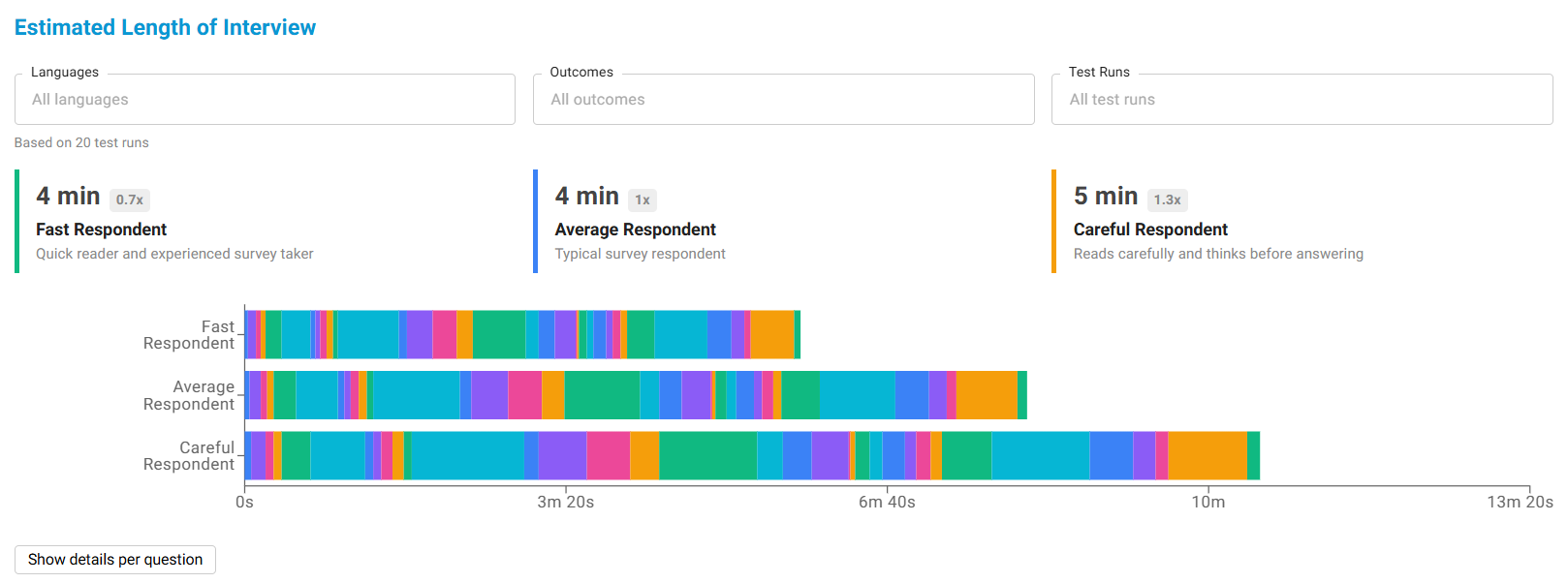
The Estimated Length of Interview feature helps users understand how long a survey is expected to take based on completed manual and bot test runs. The estimate is calculated using actual response times and presented for different respondent behavior profiles.
This information can be used to identify lengthy interviews, optimize question flow, and improve the overall respondent experience.
Use the Estimated Length of Interview view to:
- Estimate the expected survey duration before launch.
- Compare interview lengths for different respondent types.
- Analyze the impact of survey changes on completion time.
- Identify questions that require unusually long response times.
- Review timing data from specific test runs, languages, or outcomes.
Understanding the Respondent Profiles
The interview length is calculated using the average completion time from manual and bot test runs and adjusted using predefined respondent behavior factors:
| Respondent Type | Multiplier | Description |
|---|---|---|
| Fast Respondent | 0.7x | Represents an experienced participant who reads and answers questions quickly. |
| Average Respondent | 1.0x | Represents a typical survey participant. |
| Careful Respondent | 1.3x | Represents a participant who reads questions carefully and spends more time considering responses. |
The displayed duration for each profile is automatically calculated based on these factors.
Filtering the Results:
Users can refine the interview length calculations using the available filters at the top of the dashboard.
Languages: Select one or more survey languages to include only test runs completed in the chosen language(s).
Outcomes: Filter test runs by their execution status or outcome to analyze only relevant runs.
Test Runs: Select specific test runs to include in the calculation. This allows users to - exclude outdated runs, compare results from different survey versions or focus on selected manual or bot test runs.
Analyzing Question-Level Timing
To gain deeper insights, users can drill down into the interview duration analysis and review the time spent on individual questions by clickon on the button 'Show details per question' at the bottom left.
This helps identify:
- Questions that take significantly longer to answer.
- Complex or unclear wording.
- Questions that may cause respondent hesitation.
- Sections that negatively impact interview length.
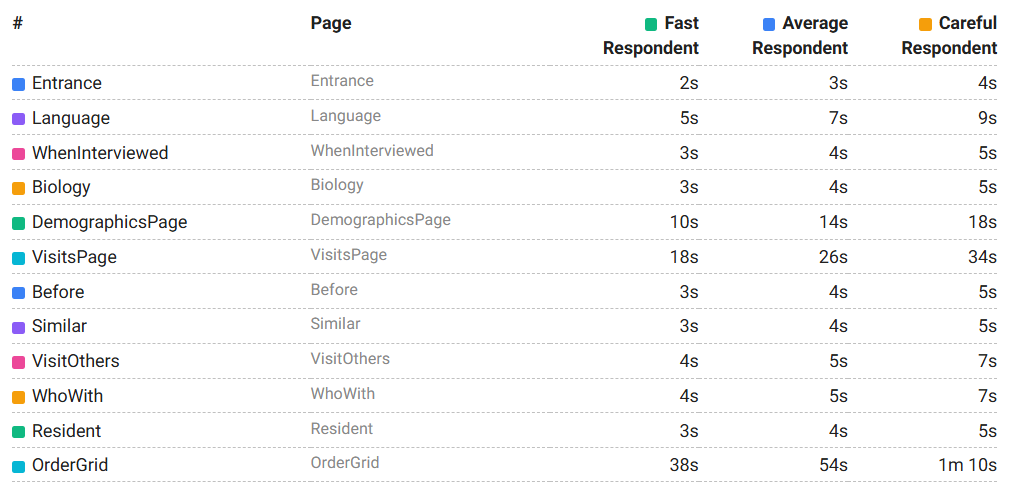
Question-level timing analysis can be used to prioritize survey improvements and reduce respondent burden.
Notes:
- Interview length estimates are based on available manual and bot test runs.
- The number of test runs used in the calculation is displayed above the respondent duration estimates.
- Applying filters immediately updates the estimated durations and visual timeline.
- Timing data should be reviewed regularly after survey modifications to ensure estimates remain accurate.
Example Use Case
A survey designer notices that the Careful Respondent interview length exceeds the desired target duration.
By filtering for completed test runs and drilling down into question-level timing data, the designer identifies several questions that require significantly more time to answer. After simplifying the wording and reducing unnecessary complexity, the estimated interview duration decreases across all respondent profiles, resulting in a more respondent-friendly survey.