Adding Multiple Languages and Markets & Create Test Case with additional Parameters
Auto‑Importing Languages, Markets Using Test Survey URLs
For projects containing multiple languages and multiple markets, you no longer need to manually add each parameter one by one.
The system can now automatically identify unique parameter values directly from your test survey URLs and create Languages, and MarketsMarkets. forIf you.you need more parameters you can add those using Test Case.
1. Importing Multiple Languages
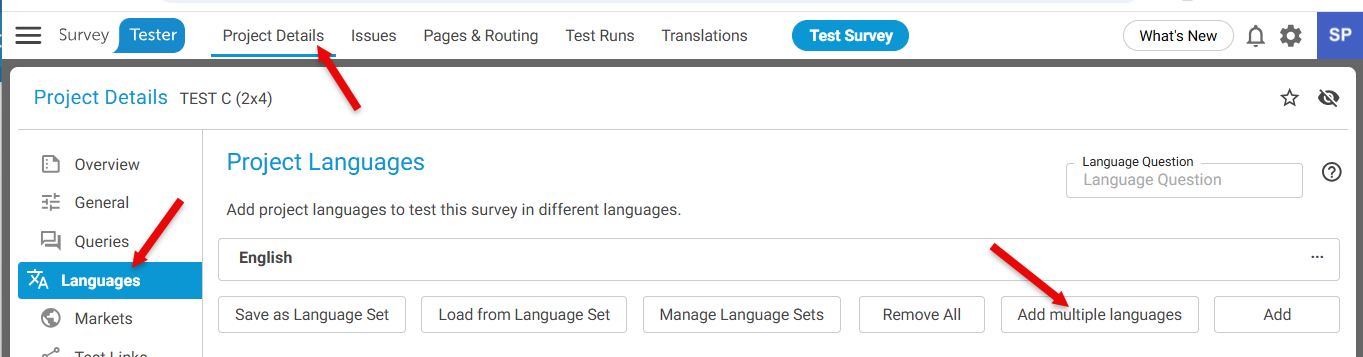
- Go to Project Details
- Select Languages from the left-hand panel
- Click on button Add Multiple Languages
Step 2: Provide Test Survey URLs
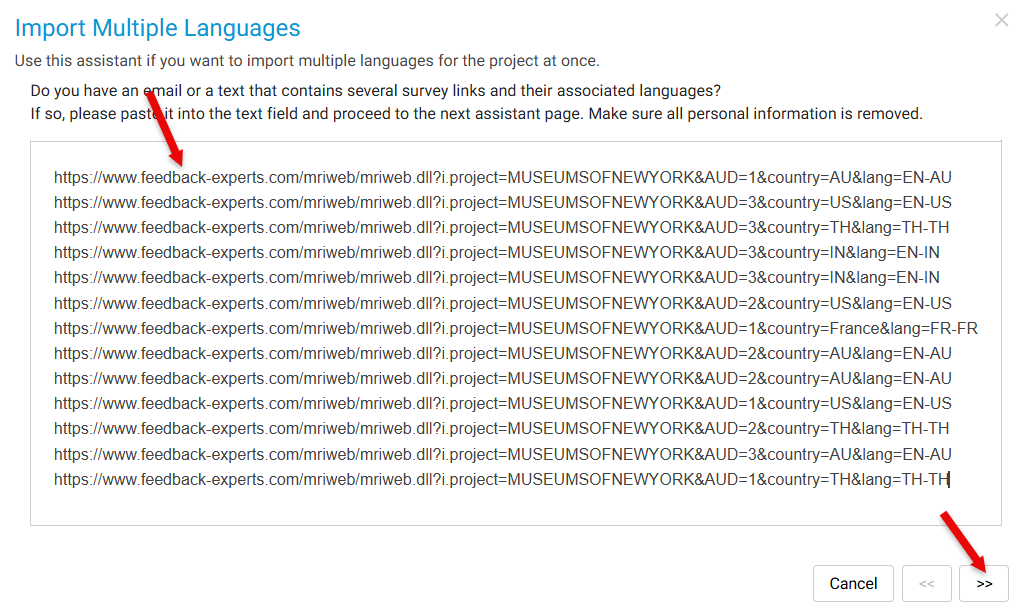
- Copy all your test survey URLs
- Paste them into the Import Multiple Languages window
- Click Next
Step 3: System Processing: The system will -
- Scan all provided URLs
- Identify unique ISO language values found in URL parameters
- Ignore duplicates and mark them as “Duplicate language”
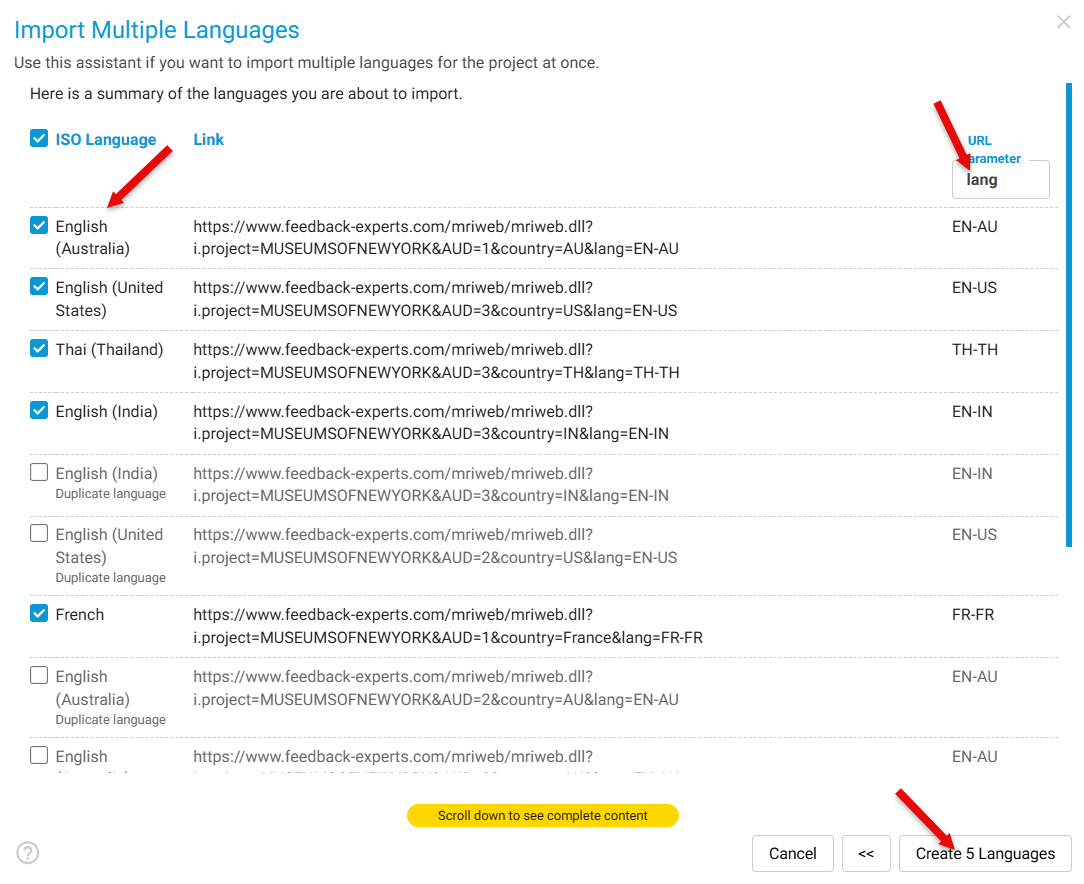
Example parameter found: lang=EN-AU
Step 4: Create the Languages: Click Create x Languages and the system will automatically generate languages using:
- The parameter name
- The language value
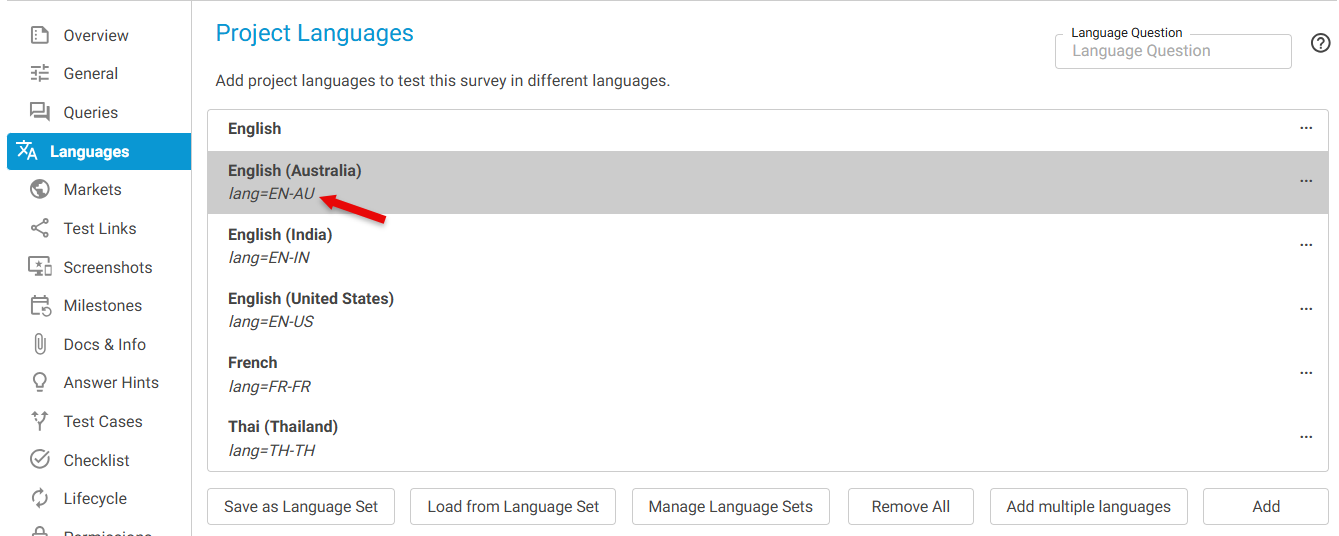 Example created: EN-
AU → English (Australia)
2. Importing Multiple Markets
- Go to Project Details
- Select Markets
- Click on button Add Multiple Markets
Step 2: Provide Test Survey URLs
- Copy and paste the same test survey URLs
- Click Next
Step 3: System Identification: The system analyzes the URLs and detects unique market-related parameters. You will see:
- A list of unique parameter names and values
- A dropdown to select the Market variable (e.g., country, region)
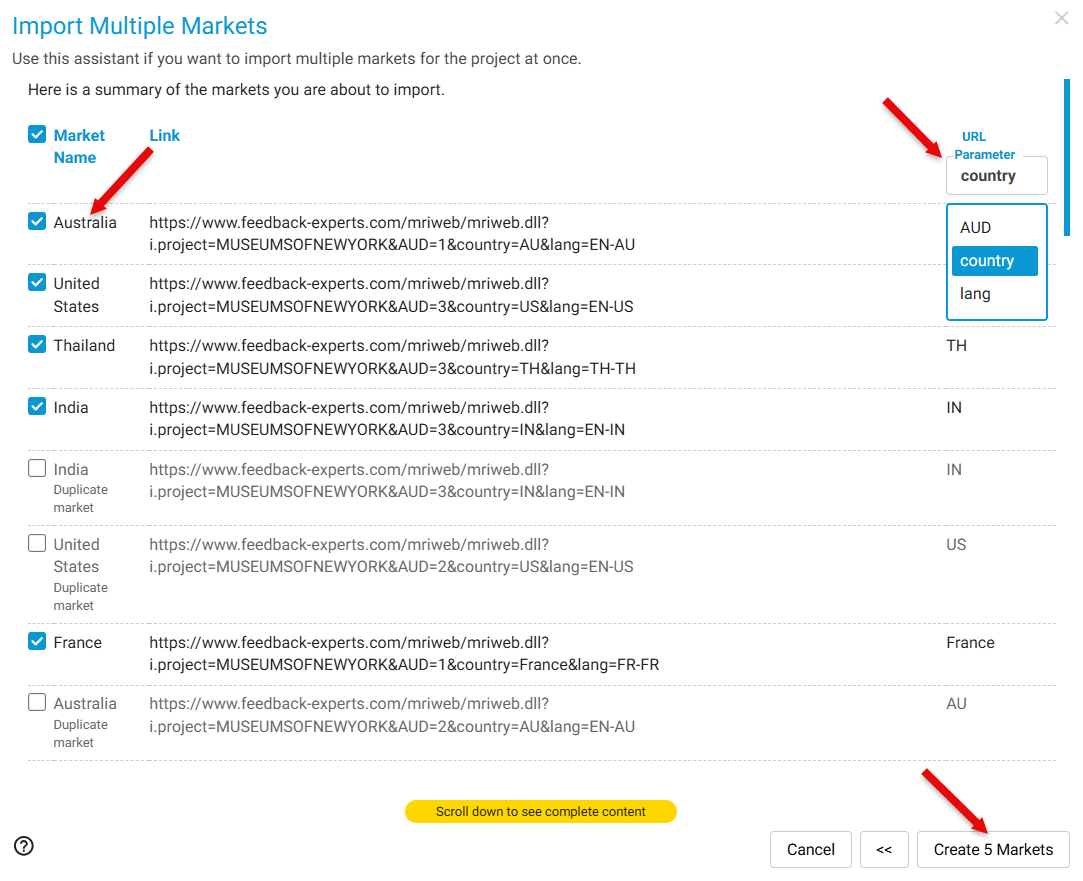
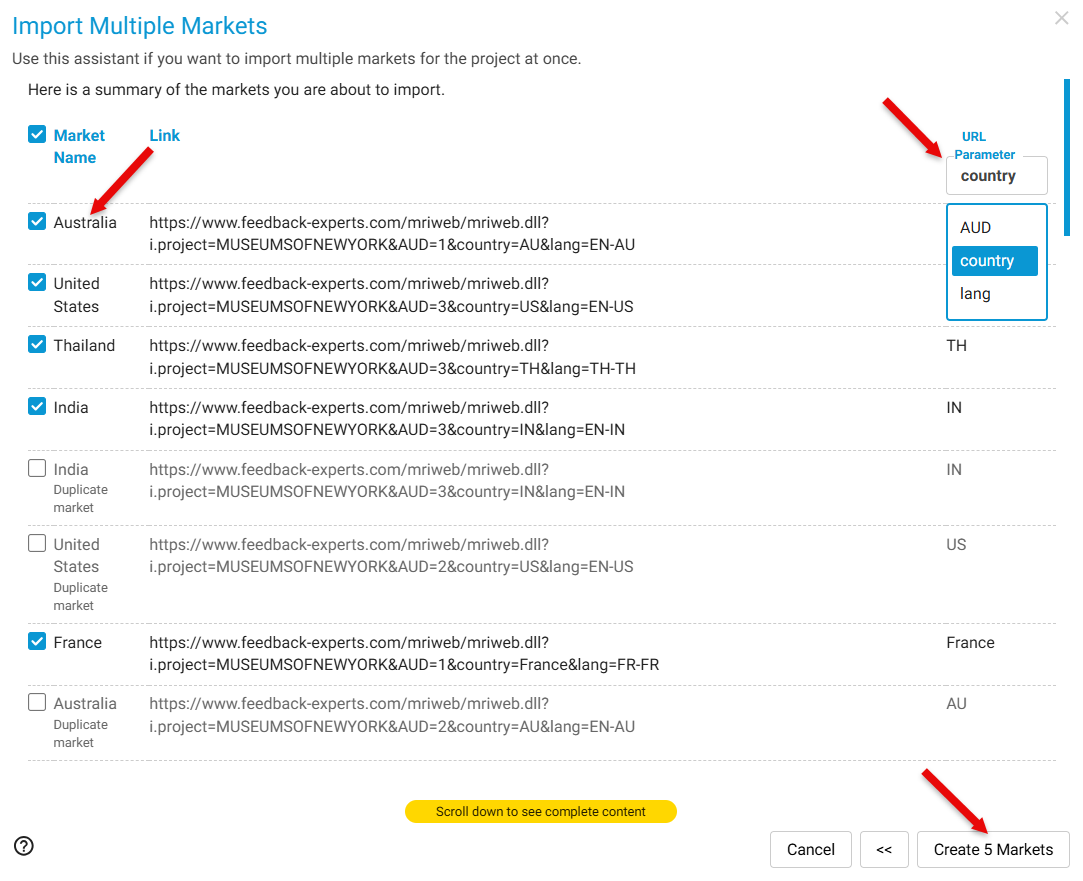
Step 4: Create the Markets
- Select the relevant variable (e.g., country)
- Click Create X Markets
Example created: country=TH → Market: Thailand (TH)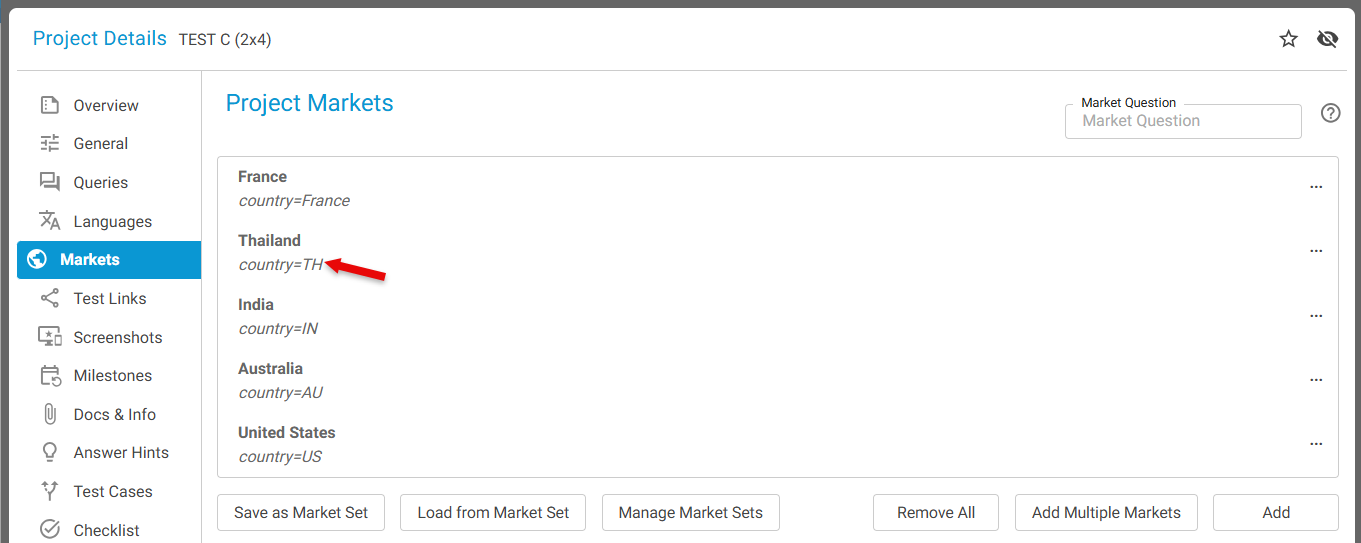
3. Adding Additional Test Cases
If you have more parameters (e.g., device type, channel, custom routing values), you can add them manually.
Step 1: Open Test Cases
- In Project
Details,Details, select Test Case from the left panel - Click Add New Test Case
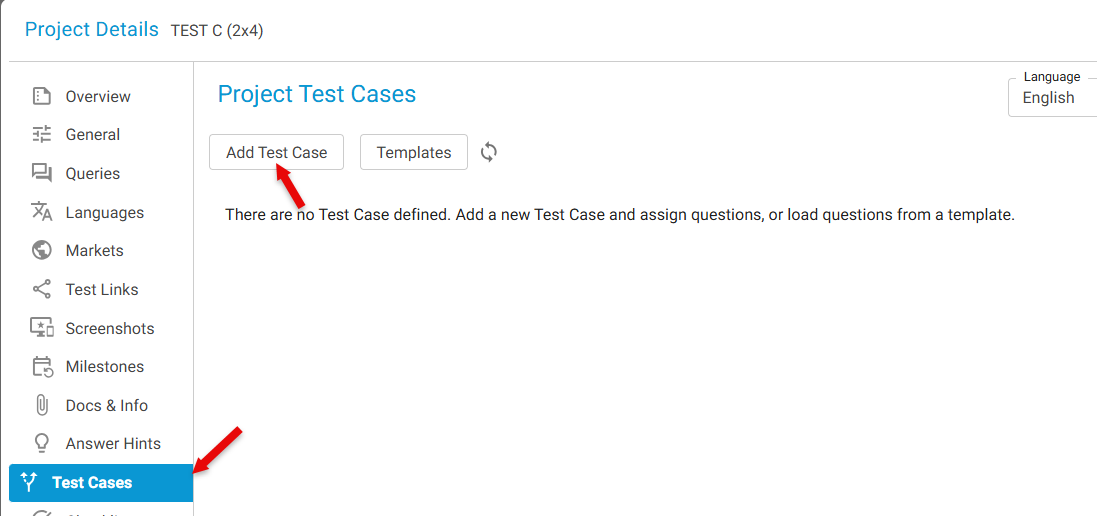
Step 2: Provide Test Case Details
- Enter the Name of the test case
- Provide the parameter value
- Click Add
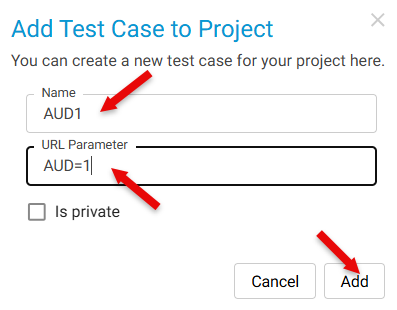
Repeat as needed for all unique values.
All created test cases will appear in the Test Case dropdown list.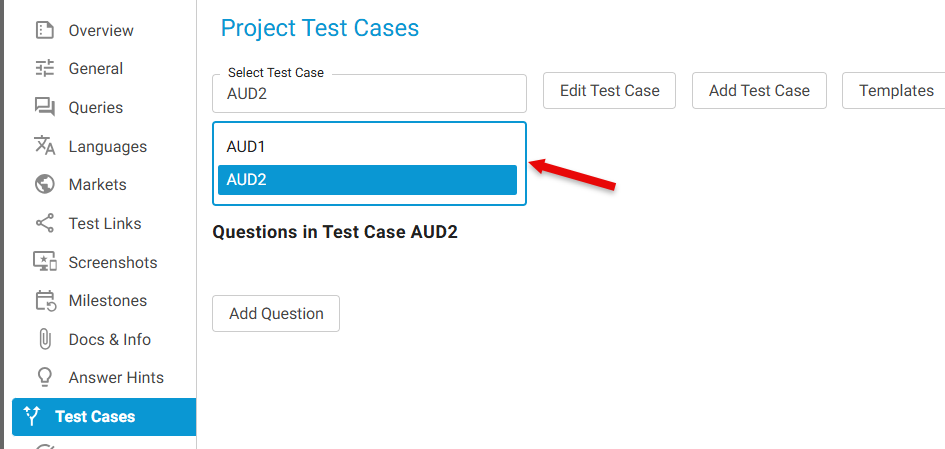
✅ 4. Begin Testing
Once Languages, Markets, and Test Cases are created:
- Open the Test Survey Window
- Select:
- The Language
- The Market
- Any Test Case as needed
- Start testing with fully populated unique parameter combinations
✅ Summary
You are now set to automatically create:
LanguagesMarketsTest Cases
…all based on the unique parameters extracted from your test survey URLs.
This significantly reduces manual setup time and improves accuracy across multi‑language and multi‑market projects.
If you'd like, I can also: ✅ Add screenshots✅ Produce a polished PDF or Word manual✅ Create a quick‑start version✅ Add troubleshooting or FAQs
Would you like any of these improvements?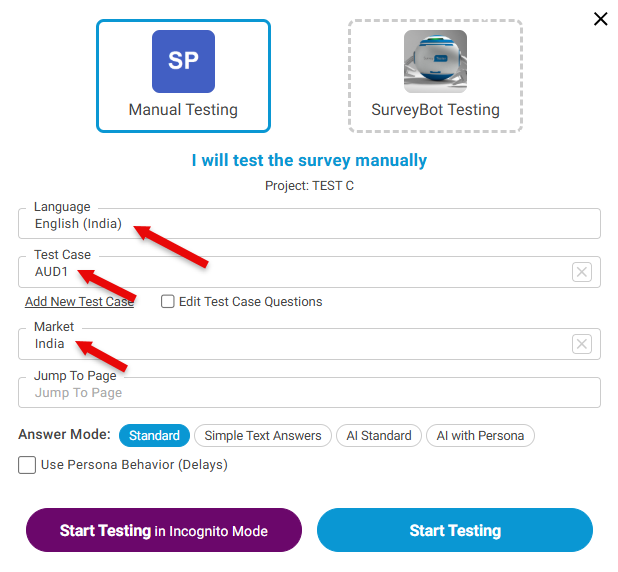
Below is a clean, structured Documentation Manual based entirely on the instructions you provided.Let me know if you'd like this converted into a PDF, Word doc, or formatted for a knowledge base.
Documentation Manual: Auto‑Importing Languages, Markets & Test Cases Using Test Survey URLs
Overview
For projects containing multiple languages and multiple markets, you no longer need to manually add each parameter one by one.The system can now automatically identify unique parameter values directly from your test survey URLs and create Languages, Markets, and Test Cases for you.
This manual explains how to:
Import multipleLanguagesImport multipleMarketsCreate additionalTest CasesBegin testing using the newly created variables
✅ 1. Importing Multiple Languages
Step 1: Navigate to the Languages Section
Go toProject DetailsSelectLanguagesfrom the left-hand panelClickAdd Multiple Languages
Step 2: Provide Test Survey URLs
Copy all yourtest survey URLsPaste them into theImport Multiple LanguageswindowClickNext
Step 3: System Processing
The system will:
Scan all provided URLsIdentifyunique ISO language valuesfound in URL parametersIgnore duplicates and mark them as“Duplicate language”
Example parameter found:
lang=EN-AU
Step 4: Create the Languages
Click Create X Languages.
The system will automatically generate languages using:
Theparameter nameThelanguage value
Example created:
EN-AU → English (Australia)
✅ 2. Importing Multiple Markets
Step 1: Navigate to Markets
Go toProject DetailsSelectMarketsClickAdd Multiple Markets
Step 2: Provide Test Survey URLs
Copy and paste the sametest survey URLsClickNext
Step 3: System Identification
The system analyzes the URLs and detects unique market-related parameters.
You will see:
A list ofunique parameter names and valuesA dropdown to select theMarket variable(e.g., country, region)
Step 4: Create the Markets
Select the relevant variable (e.g.,country)ClickCreate X Markets
Example created: country=TH → Market: Thailand (TH)
✅ 3. Adding Additional Test Cases
If you have more parameters (e.g., device type, channel, custom routing values), you can add them manually.
Step 1: Open Test Cases
In Project Details, selectTest Casefrom the left panelClickAdd New Test Case
Step 2: Provide Test Case Details
Enter theNameof the test caseProvide theparameter valueClickAdd
Repeat as needed for all unique values.
All created test cases will appear in the Test Case dropdown list.
✅ 4. Begin Testing
Once Languages, Markets, and Test Cases are created:
Open theTest Survey WindowSelect:TheLanguageTheMarketAnyTest Caseas needed
Start testing with fully populated unique parameter combinations
✅ Summary
You are now set to automatically create:
LanguagesMarketsTest Cases
…all based on the unique parameters extracted from your test survey URLs.
This significantly reduces manual setup time and improves accuracy across multi‑language and multi‑market projects.
If you'd like, I can also: ✅ Add screenshots✅ Produce a polished PDF or Word manual✅ Create a quick‑start version✅ Add troubleshooting or FAQs
Would you like any of these improvements?
For projects with multiple languages and and multiple markets, you will no longer need to add all languages and markets paraments one by one. All you need is to get the test survey URLs and the system will fetch unique values and create it for you.
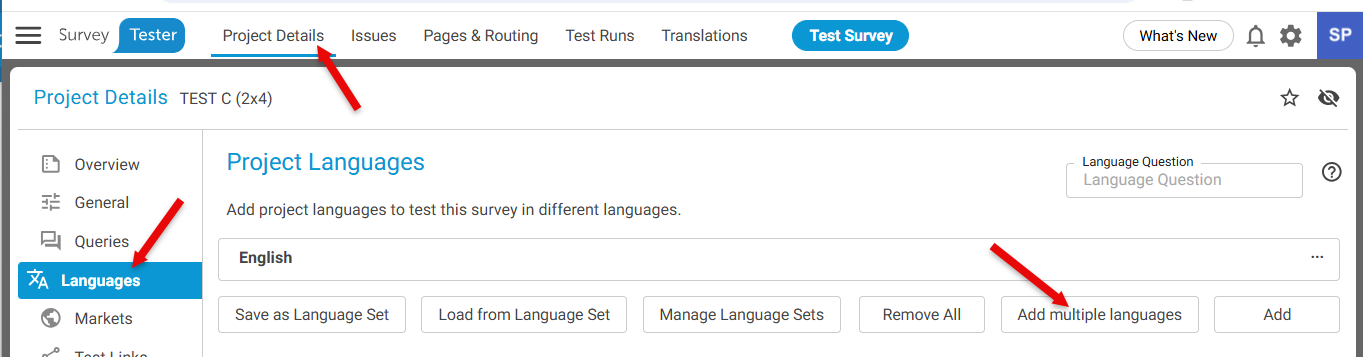
to do this you can go to Project Details, and select Languages from the left panel and click on "Add multiple languages"
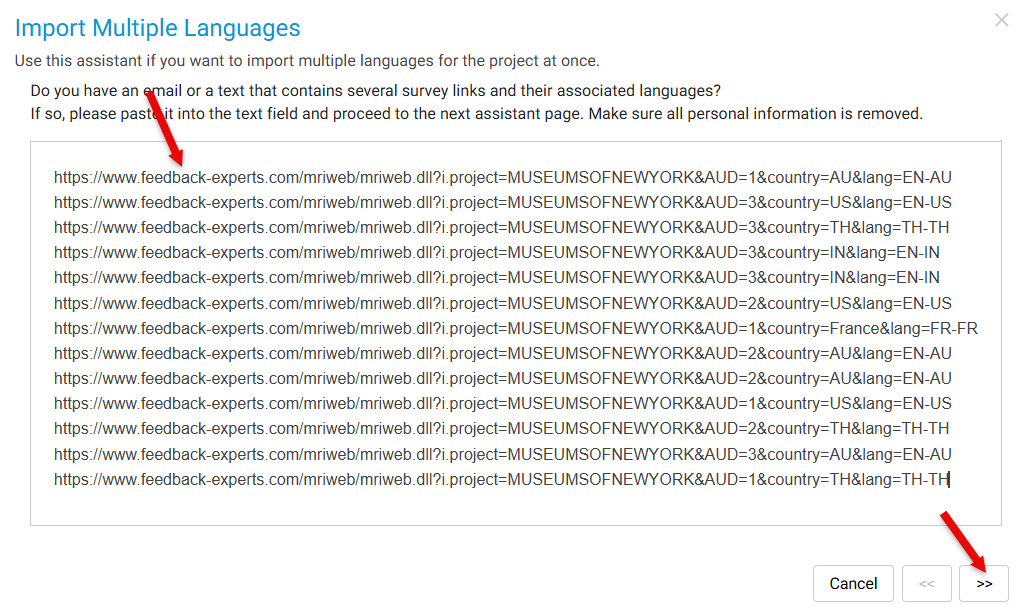
Copy all the test URLs and paste it in the new window "Import Multiple Languages" and click on the next button.
The system will process the URLs provided and identify the unique ISO languages from the URL parameters and ignore the others tagging them as 'Duplicate language'.
To import the languages click on the button "Create x Languages".
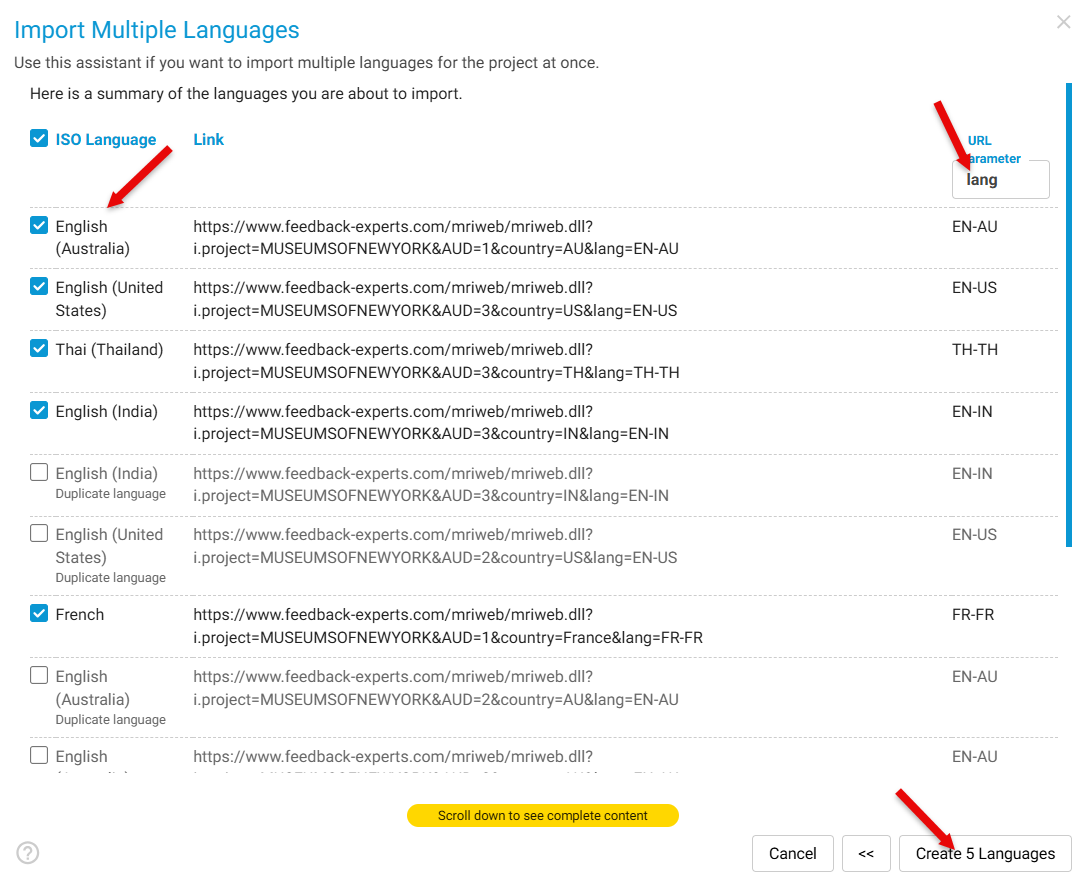
The languages will be created with the parameter name and the language values. for e.g. "lang=EN-AU" for English Australia.
Now to add Markets, follow the similar Steps - goto Project Details and Click Markets on the left panel and click button "Add Multiple Market". Then copy paste the survey test URLs and click on Next button.Now the import Multiple Markets window will show the unique parameters identified in the URL and allow you to select the relevant Market variable.
Select the variable and click on button "Create X Markets"
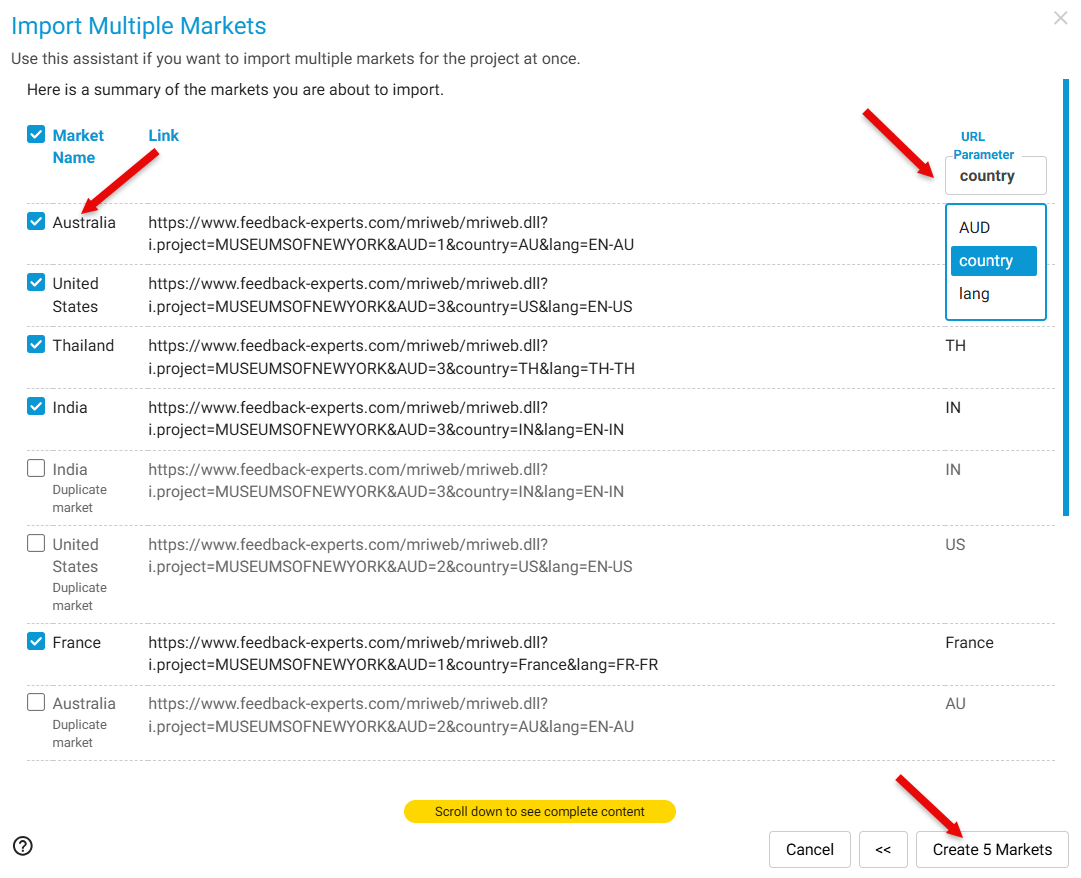
The system will create the Markets based on the selected parameter. for e.g. country was select and the parameter "country=TH" was created.
If there are more parameters to be added, you can click click on the "Test Case" tabe on the left panel and add new "Test Case"
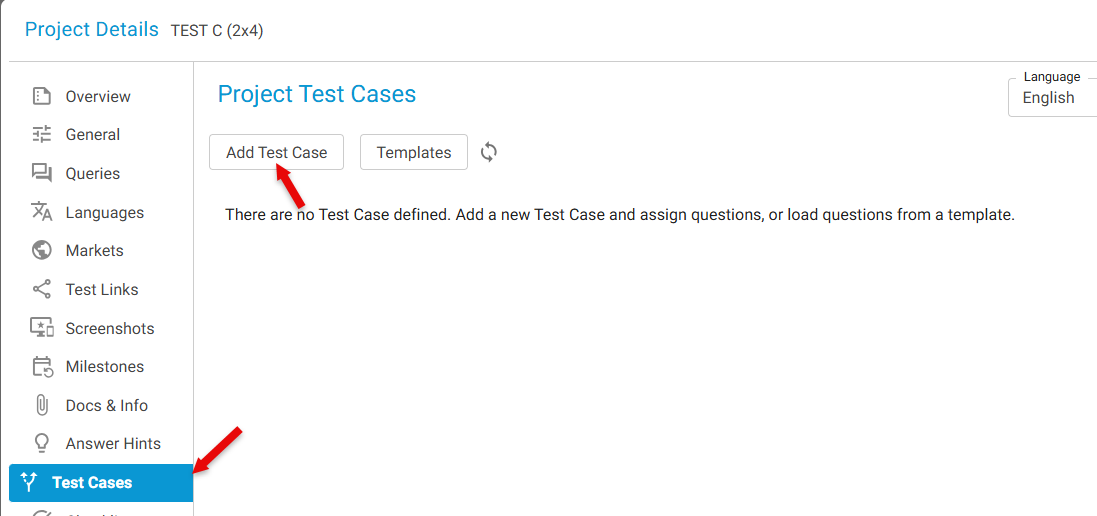
Provide a Name to the Test Case and the parameter value. and click Add. Repeat the same proceed to add all unique values for this parameter.
And you will see all the test cases created in the drop list.
You are all set with creating Languages, Markets and Test Cases with unique parameters that will be appended to the test survey URL.
Select the variables created form the test survey window and start testing.